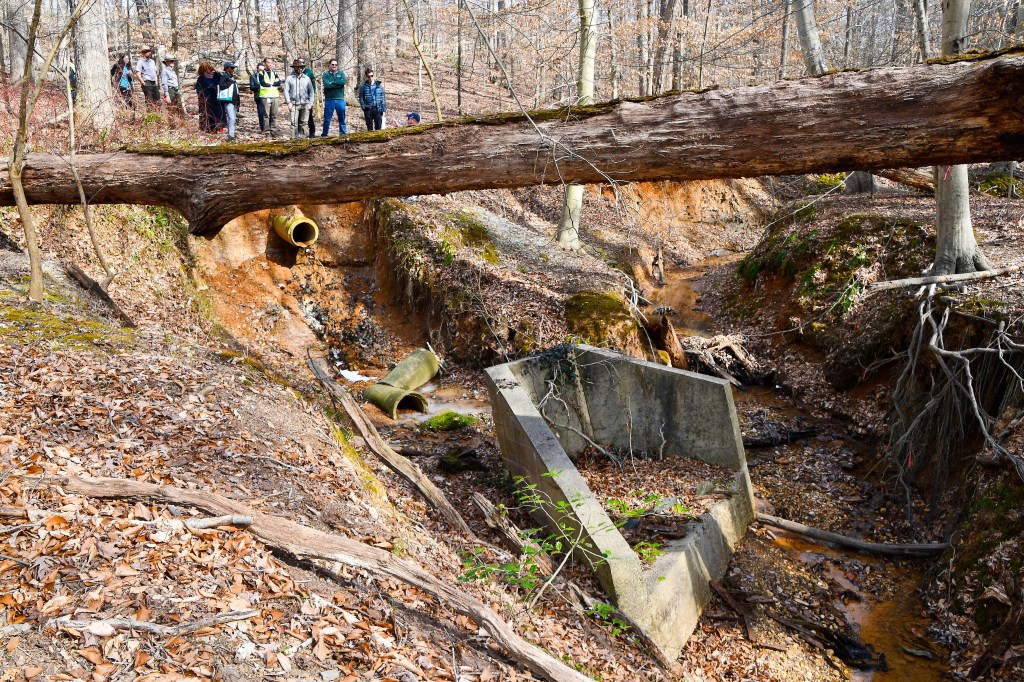
D.C. Department of Energy and Environment’s Josh Burch, Anacostia Parks & Community Collaborative’s Brenda Richardson and Anacostia Riverkeeper’s Trey Sherard lead the group through Fort Dupont Park for the first stop on the Feb. 26 tour. Behind them are others from DOEE and from the Anacostia Watershed Society, the National Park Service and the White House Council on Environmental Quality. (Robert R. Roberts/The Washington Informer)
The District, a city built at the meeting point of two rivers, has lost about 70% of the smaller waterways that defined its geography 125 years ago. Over the past decade, D.C. has begun working to protect some of the streams and creeks that still exist today, many of which face major threats.
Late last month, federal and local officials — along with a few D.C. activists — took a tour of three streams in Ward 7, each of which is in different stages of restoration work.
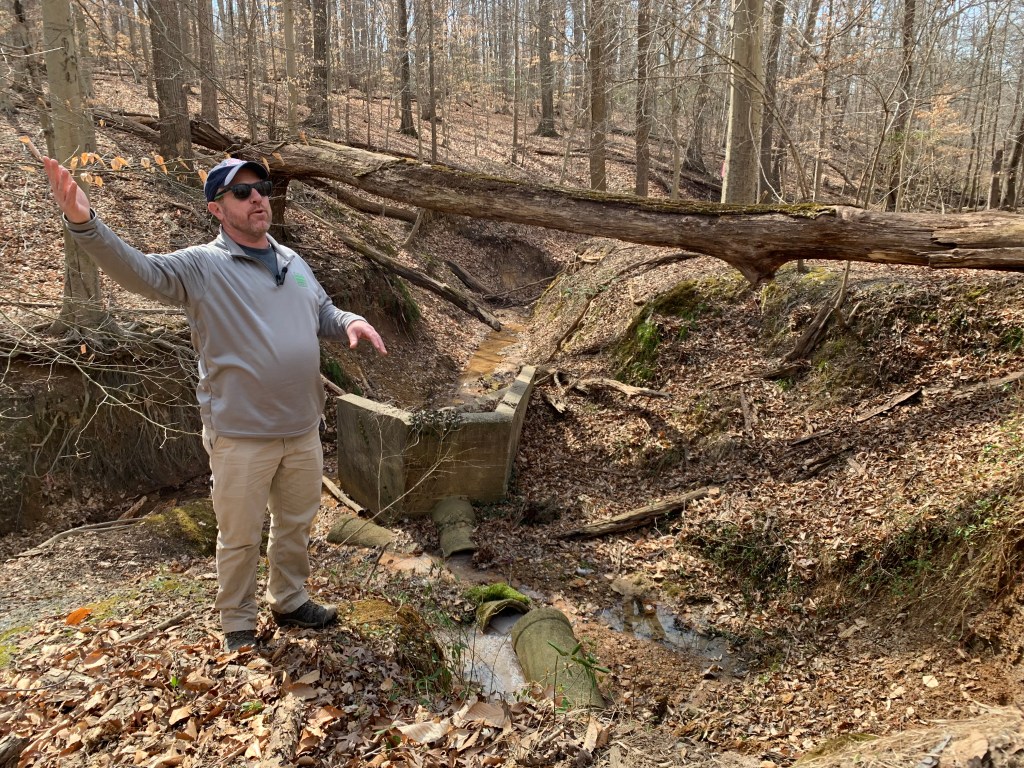
The biggest threat to the Fort Dupont stream comes from old stormwater infrastructure. Pipes like the one visible here send massive amounts of water directly into the stream, causing the stream’s banks to erode — that’s what causes the steep drop seen in this picture. That mix of sediment and stormwater flows straight to the Anacostia River. (Robert R. Roberts/The Washington Informer)Josh Burch, DOEE’s stream protection specialist, describes the problem to the group. “It’s like taking a firehose and pointing it at sand,” he explained. “When it rains out, the Anacostia River looks like coffee with milk in it, and it’s all that sediment stirred up.” (Kayla Benjamin/The Washington Informer)
Site 2: Fort Davis Tributary – Under Construction
In the woods along Park Drive SE near Branch Avenue SE, construction is underway to address major stream bank erosion, which has created a massive drop not far from the edge of the road. The project, which will build a series of “stair steps” designed to slow down and spread out the flow of water, started construction in January and is expected to finish by June 1. (Robert R. Roberts/The Washington Informer)In the woods along Park Drive SE near Branch Avenue SE, construction is underway to address major stream bank erosion, which has created a massive drop not far from the edge of the road. The project, which will build a series of “stair steps” designed to slow down and spread out the flow of water, started construction in January and is expected to finish by June 1. (Robert R. Roberts/The Washington Informer)Brenda Mallory, chair of the White House Council on Environmental Quality. “One of my favorite parts of my job is really being able to go out into the communities and see how people are energized by what these funds can do,” Mallory said. (Kayla Benjamin/The Washington Informer)
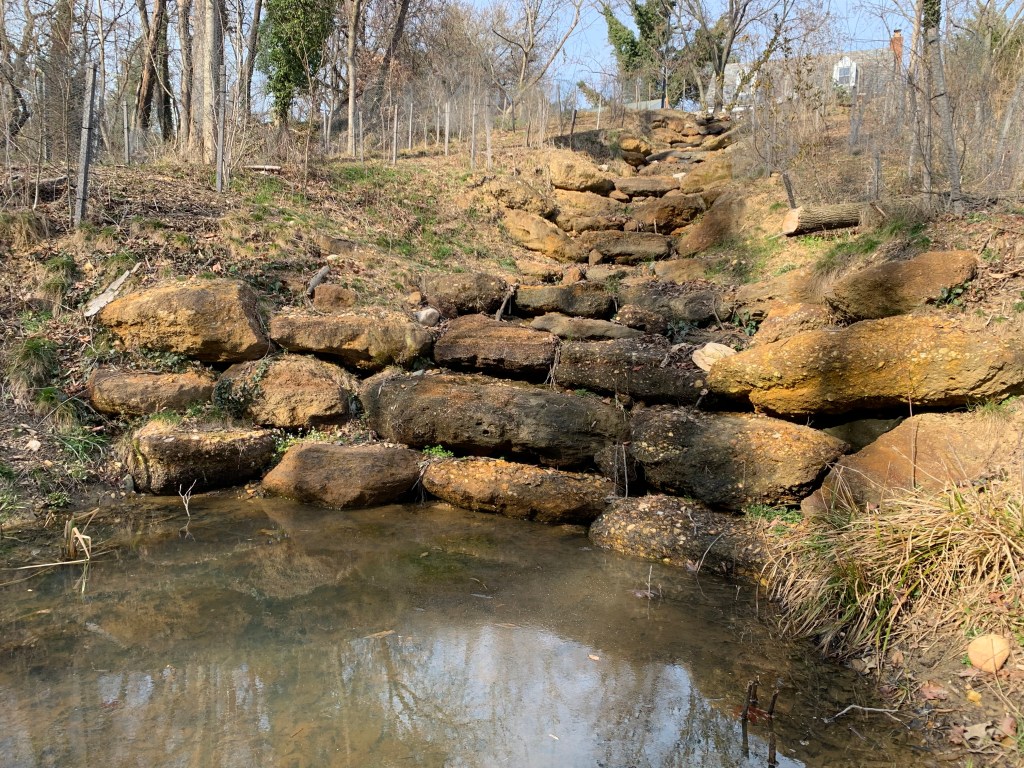
Site 3: Branch Avenue Project – Completed
At the completed stream project by Erie Street SE and Branch Avenue SE, the restored cascading formation helps slow down the water’s flow during rain events. (Kayla Benjamin/The Washington Informer)The restored stream has created healthy habitat for species that couldn’t survive in the degraded stream, like water lilies, frogs and even beavers. (Robert R. Roberts/The Washington Informer)
According to Burch, some of the waterway’s human neighbors appreciate the change, too.
“This is the anecdotal stuff, it’s not scientific — but one of the things that residents like about stream restorations is [that] they can hear the stream flowing,” he said.
Kayla Benjamin covers climate change & environmental justice for the Informer as a full-time reporter through the Report for America program. Prior to her time here, she worked at Washingtonian Magazine...
More by Kayla Benjamin