

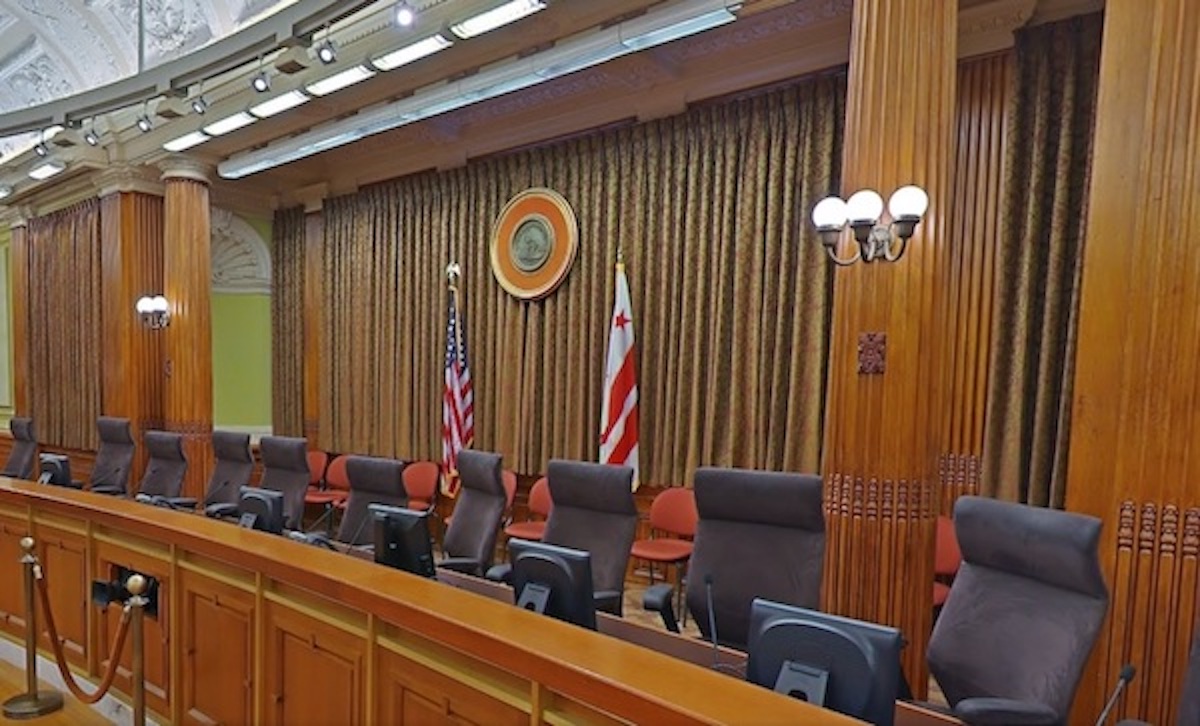
A municipal budget reflects a city’s values and priorities. In this light, despite some concerning provisions, the Council of the District of Columbia’s passage of the city’s fiscal year 2025 budget is a positive step for Ward 7 and 8 families and students.
The council had the challenging task of reconciling punitive public safety measures with restorative and holistic solutions. While Mayor Muriel Bower’s initial budget proposal focused heavily on funding the controversial Secure DC Act, the council listened to concerns from advocacy groups like ours and introduced amendments to address the Act’s more contentious items impacting youth, like the Anti-Mask provision and truancy policies.
Notably, the council embraced a commitment to social determinants of health by nearly restoring the Community Schools grant program, which the mayor’s initial budget would have reduced to operating at fewer than 18 schools. Our polling data showed a strong desire among residents for more high-quality schools for our children in Wards 7 and 8. As a parent of two public school students, I know firsthand the value of Community Schools, which provide wraparound services to students and families, reducing chronic absenteeism and improving academic performance.
The revised budget also explores innovative approaches to incentivizing parental behavior instead of penalizing families. The Parent Stipend Program provides a monthly stipend to eligible parents, ensuring their children can safely make it to school.
Funds were restored for school sports programs, recognizing their positive impact on reducing crime and reoffending. Investments were made in the Early Childhood Educator Pay Equity Fund, Emergency Rental Assistance Program, and Local Rent Supplement Program – all wins for entry-school professionals and families in Wards 7 and 8.
However, the council axed funding for a new Interim Alternative Education Program, which would provide a safe and educational focus space for suspended students with behavioral issues – a concerning oversight. Suspended students will not have any structured environment during school hours – alarming with the passing of the Secure DC Act that permits controversial Metropolitan Police Department practices that could be harmful or even fatal to these students.
We must continue finding an equitable approach that addresses all students’ and families’ needs, incorporating their voices even after the bill becomes law. The status quo exacerbates the school-to-prison pipeline in D.C.
We must continue finding a balanced approach that addresses all students’ and families’ needs, incorporating their voices even after the bill becomes law. The status quo exacerbates the school-to-prison pipeline in D.C.
While the council had a difficult job reconciling various viewpoints and funding pressures, this budget version is likely the best we’ll get out of this cycle. However, we must emphasize that more work remains to be done. We call on the mayor and council to make even deeper investments in families and children in Wards 7 and 8 in the next budget cycle.
Erika Harrell is the executive director of ElectED DC, an organization that engages residents of Wards 7 and 8 to build political power, increase the representation of historically marginalized communities at all levels, and advocate for the policy conditions that will enable every D.C. student to thrive. Learn more at www.electeddc.org.