

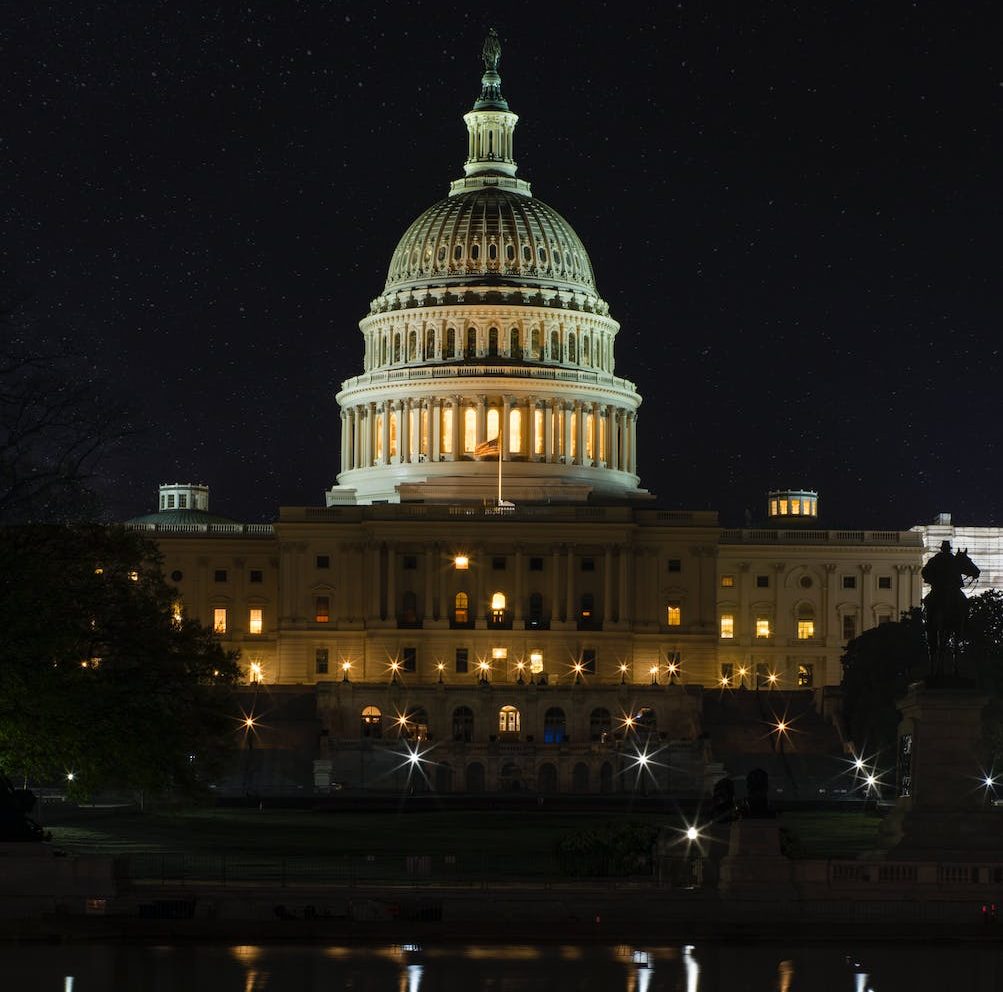
As the March 1 deadline approaches without a resolution, the threat of a government shutdown looms, creating a ripple effect that could have far-reaching consequences for Washington, D.C., Maryland and Virginia.
The impasse results from the inability of MAGA-aligned Republicans in the House to agree or even meet on a funding solution, leaving the federal government teetering on the brink of a grinding halt despite hopes of a bipartisan spending deal. Disagreements over policy issues persist, with House Speaker Mike Johnson (R-Louisiana) apparently taking orders to allow a shutdown from the twice-impeached and four-times-indicted former President Donald Trump, facing internal pressure to secure conservative wins.
Senate Democrats, including Elizabeth Warren (Massachusetts), Jon Tester (Montana), and Joe Manchin (D-West Virginia), have expressed frustration and condemnation at the deadlock. Warren criticized the Republican inability to fulfill Congress’s basic duties, labeling the situation “ridiculous.” At the same time, Tester called GOP inaction “bullsh*t,” emphasizing the need to fund the government, not shut it down.
Senate Majority Leader Chuck Schumer (D-New York) warns of the impending risk in a “Dear Colleague” letter, attributing the delay to chaos within the House Republican conference. House Speaker Johnson, however, defends their continuous efforts, countering Schumer’s criticism.
Senate Minority Leader Mitch McConnell (R-Kentucky) voiced concerns about the harmful impact of a potential shutdown, urging collaboration between the House and Senate to avert the potentially dire consequences.
A shutdown threatens to disrupt residents’ daily lives in D.C., Maryland and Virginia. The Smithsonian museums and the zoo reportedly could use prior-year funding to remain open temporarily in the nation’s capital. Still, uncertainty surrounds the fate of memorials on the National Mall.
The immediate economic impact could be severe for Maryland, where federal paychecks support 240,000 households. Officials reportedly plan to use state funds to mitigate the effects temporarily, but federal workers, including those commuting from Maryland to D.C. or Northern Virginia, face potential layoffs.
Virginia, home to a substantial federal civilian and military population, would bear the brunt of a shutdown. With over 140,000 federal civilian employees and 156,000 active-duty and reserve military members, the state’s economy is at risk, especially in areas like the Hampton Roads region, with heavy military personnel.
The potential shutdown also jeopardizes Virginia’s 22 national parks and could immediately impact federally funded programs such as the Special Supplemental Nutrition Program for Women, Infants and Children (WIC).
“There’s no question that this is not a good thing for the country, but it’s certainly not a good thing for Metro specifically,” Randy Clarke, Metro’s general manager, told local news outlets prior to the last deal to avoid a shutdown. “And the timing is really challenging because ridership is really starting to grow back. So, you know, we’re going to be watching this very closely and we’re hoping that if it happens, it’s very short.”
