

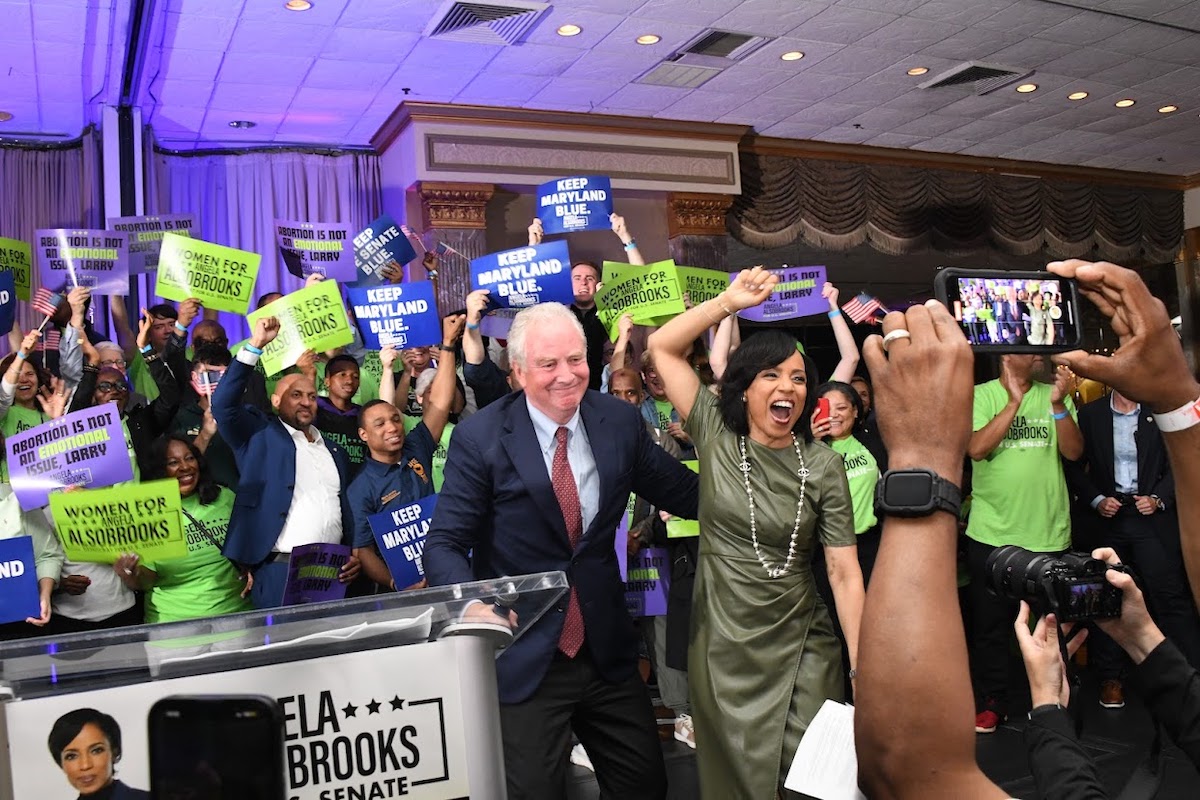
Maryland’s primary elections came to a close on Tuesday night with the closely contested U.S. Senate race ending with Prince George’s County Executive Angela Alsobrooks as the Democratic victor and Larry Hogan, Maryland’s former governor, as the Republican winner.
“My name is Angela Alsobrooks, and I am officially your Democratic nominee in Maryland’s Senate race,” Alsobrooks wrote on X (formerly known as Twitter).
Hogan wrote his campaign “for Maryland and America’s future begins now.”
“I want to thank the people across the great state of Maryland for your support,” he wrote on X. “The Washington politicians win by perpetuating polarization, but Maryland is known as the state of middle temperament. We believe in common decency and common sense.”
Though there were many candidates and contests to watch throughout the state, including Baltimore’s mayoral race, and people vying for congressional seats, the race to replace longtime Sen. Ben Cardin (D) has been competitive from the very beginning.
The competition between Alsobrooks and U.S. Rep. David Trone (D), became particularly contentious the closer time ticked toward election day on May 14. Alsobrooks trailed Trone in early voting numbers, while the Trone campaign had to take back and clarify certain comments that some argued undermined his opponent and her supporters.
Trone donated over $60 million to his campaign, among the largest self-financed campaigns in American political history. While, Alsobrooks boasted the support of major state leaders, including Gov. Wes Moore (D), Comptroller Brooke Lierman (D), and most of Maryland’s congressional delegation.
The Associated Press called the race for Alsobrooks at 9:55 p.m. on election night. Alsobrooks, Gov. Moore and union workers gathered that evening in Greenbelt, Maryland pledging to continue their efforts into the general election.
“On November 5, 2024, we are going to defeat Larry Hogan, keep Maryland blue, and keep our Senate under Democratic control — spread the word,” Alsobrooks declared on social media.
Hogan said he’s ready to get down to business.
“I come from the get-to-work and get-things-done school, and I’ll work with anyone who wants to do the people’s business. That’s what I did for eight years as your governor, and it’s exactly what I’ll do in the United States Senate.”
The Road to the Primary
Marylanders came out to vote even before Tuesday. Just over 150,000 votes were received prior to Election Day, roughly 4% turnout in a year, without contested presidential primaries for either major political party. Mailed ballots can now be counted prior to Election Day, and the election results become available online as soon as the polls close and precincts begin to report.
Alsobrooks said that she was “on course to win” during early voting, while Trone emphasized throughout the campaign that he was a stronger general election candidate, particularly as he had won Republican areas in the past and had virtually unlimited campaign finances to conduct his general election campaign.
In the final publicly-released polls conducted prior to the primary, both Alsobrooks and Trone led former Republican Governor Larry Hogan.
Observers noted the contentious nature of the primary in the final days leading to the election, which begged the question of how party divides will be bridged regardless of the nominee.
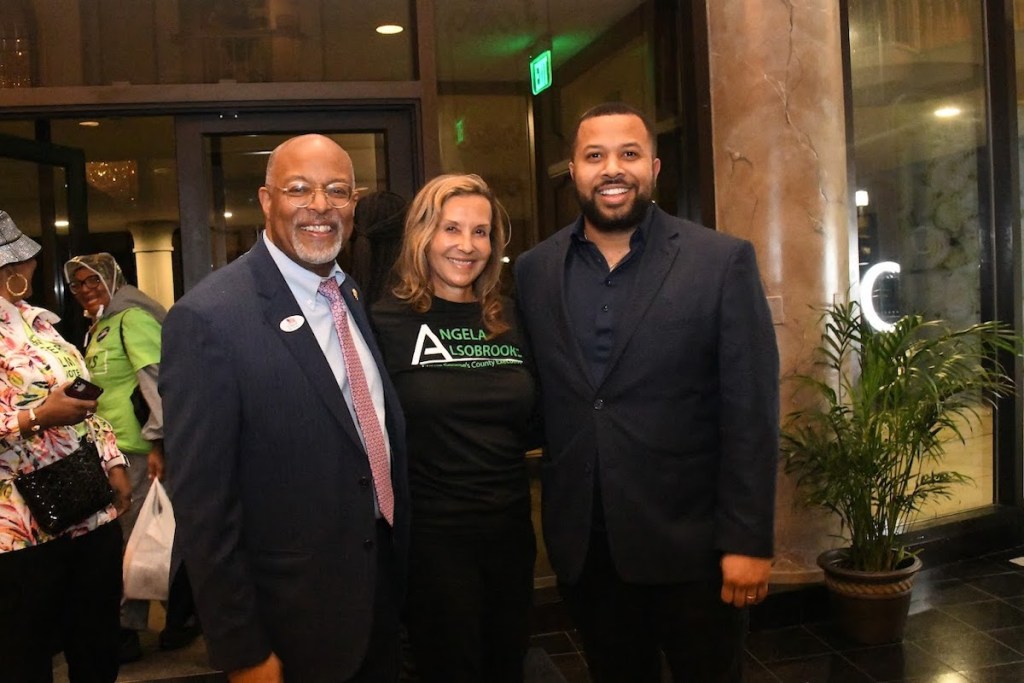
Supporters of Alsobrooks raised issues with Trone’s verbal gaffes and outsized personal spending on the race. Trone supporters, particularly those from Prince George’s County, have called out Alsobrooks’ record.
“I think folks will unify to the degree that we can but words do matter. The more divisive the rhetoric, the more personal it gets, the longer it takes for that healing process to occur. And Larry Hogan is no joke. He is going to be one heck of a candidate,” said Maryland Treasurer Dereck Davis (D), who endorsed Alsobrooks. “As soon as the party is able to unify behind the winner and run united, I think the greater our chances are. But this tone that’s taking place, this level of discourse is taking place, it’s going to require more healing.”
Delegate Joseline Peña-Melnyk (D-District 21), a Trone supporter, also said that party unity will be critical to defeat Hogan. The 2002 and 2014 elections, both highly contested and with strong party divisions, resulted in Republican governors in the general election.
The Results Are In
Throughout election night, numbers remained close in many congressional districts, as well as in the Baltimore mayor race.
Baltimore County Executive Johnny Olszewski (D) easily won the Democratic primary in the 2nd Congressional District against Delegate Harry Bhandari (D-District 8), and is likely to win the general election to replace longtime Congressman Dutch Ruppersberger (D).
In both the 3rd and 6th congressional districts, more than 10 candidates vied for the nomination.
State Sen. Sarah Elfreth (D- District 30) and retired Capitol police officer Harry Dunn were the top polling candidates in the 3rd District to replace longtime Congressman John Sarbanes (D). Elfreth won with 35.4% of the vote in comparison to Dunn’s 24.8%.
Secretary April McClain Delaney was the victor in the 6th District race against Delegate Joe Vogel (D-District 17).
The top two contenders in Baltimore’s 2020 election were again the top candidates in 2024: incumbent Mayor Brandon Scott (D) and former Mayor Sheila Dixon (D). Perennial candidate Thiru Vignarajah dropped out shortly before the primary and endorsed Dixon, however, Scott proved victorious when The Associated Press called the race at 11:40 p.m. Tuesday.
We have previously covered the 2024 primary elections; read more here and here.View Maryland’s election results here.