

Embracing the Challenge to Lead the Energy Transformation, Equitably

By Rodney Oddoye, senior vice president of Governmental, Regulatory and External Affairs, Pepco Holdings. Rodney leads the political, policy and regulatory activities across Pepco Holdings’ three local energy companies, including Pepco in the District of Columbia and Maryland.
Pepco and the communities we serve have experienced the impact of climate change firsthand, with unprecedented storms over the last few years, including a Derecho and Tropical Storm Isaias that both hit the east coast in 2020, leaving millions of customers without electricity. And just a few weeks ago, severe storms with winds of 84 miles per hour caused extensive tree and infrastructure damage leaving tens of thousands without power across our service area.
These severe storms extend beyond our region, from the Texas power crisis in February of 2021, which affected more than 4.5 million customers, to Hurricane Ian in September 2022, which was the third-costliest weather disaster on record and the deadliest hurricane to strike the state of Florida since 1935.
This is the new normal we face, and we must invest in our energy system and support policies and programs today that enable a climate-ready grid and bring the benefits of a cleaner energy future to our communities, while maintaining access to high-quality service and high reliability. We are committed to providing more than energy to the nearly one million customers we serve as we take on our fundamental role in connecting our customers to climate solutions that advance the health and well-being of the communities where we live and work.
Equity is non-negotiable in the energy transformation
Mitigating the impact of climate change is a challenge for our time, and the human side is the primary and most important consideration. How climate change will impact our customers and communities is at the forefront of our company’s philosophy on climate readiness and preparedness.
Climate change disproportionately impacts under-resourced communities and solutions to combat climate change must address and overcome equity barriers. These inequities show up in less energy-efficient homes, they’re evident in cities or neighborhoods with poor air quality, and you see it time and again when poorer communities are more susceptible and devastated by climate disasters.
Social equity is a cornerstone of Pepco’s mission and values and we’re prioritizing vulnerable and under-resourced communities in the energy transformation by lowering barriers and making energy technologies that help combat climate change more accessible.
For example, our recent Climate Solution Plan proposal submitted to the Public Service Commission of the District of Columbia includes 11 programs focused on transportation electrification, building decarbonization and more to support the District’s goal to reach carbon neutrality by 2045. Through these programs, we aim to provide 40 percent of the customer incentives for low- to moderate-income customers and under-resourced communities, drawing inspiration from the federal Justice40 Initiative, which directs certain federal investments to provide 40 percent of benefits to communities that are marginalized, underserved, and overburdened by pollution.
Strengthening infrastructure today to handle current and future challenges
From an energy industry perspective, we must continue to invest in and build a climate ready grid that can stand up to the climate-induced factors we are dealing with today along with what’s coming our way in the future.
This includes ongoing work to inspect existing infrastructure, upgrade and modernize aging equipment, install innovative technologies to improve system reliability, and expand the grid’s capacity to support the growth of renewable energy. We are also using climate modeling and load forecasting to predict and address at-risk infrastructure.
Through active monitoring of system performance and reliability, we can effectively plan for and manage impacts to our grid from changing weather patterns as we continue to build resilience.
Accelerating climate solutions in our communities
We also have a much better understanding now of the causes of climate change and how to shift some of our efforts and investments to support climate solutions that will help us achieve the ambitious climate goals across our region.
At Pepco and our parent company Exelon, one example of this is championing a move toward the electrification of our cities and communities, including enabling charging infrastructure for electric vehicles and developing local reliability solutions that support critical infrastructure. This includes efforts like our partnership with Montgomery County, Md., to support the installation of the Brookville Smart Energy Depot, which includes a microgrid and charging infrastructure that will provide renewable energy to charge up to 70 electric buses in the county by 2026.

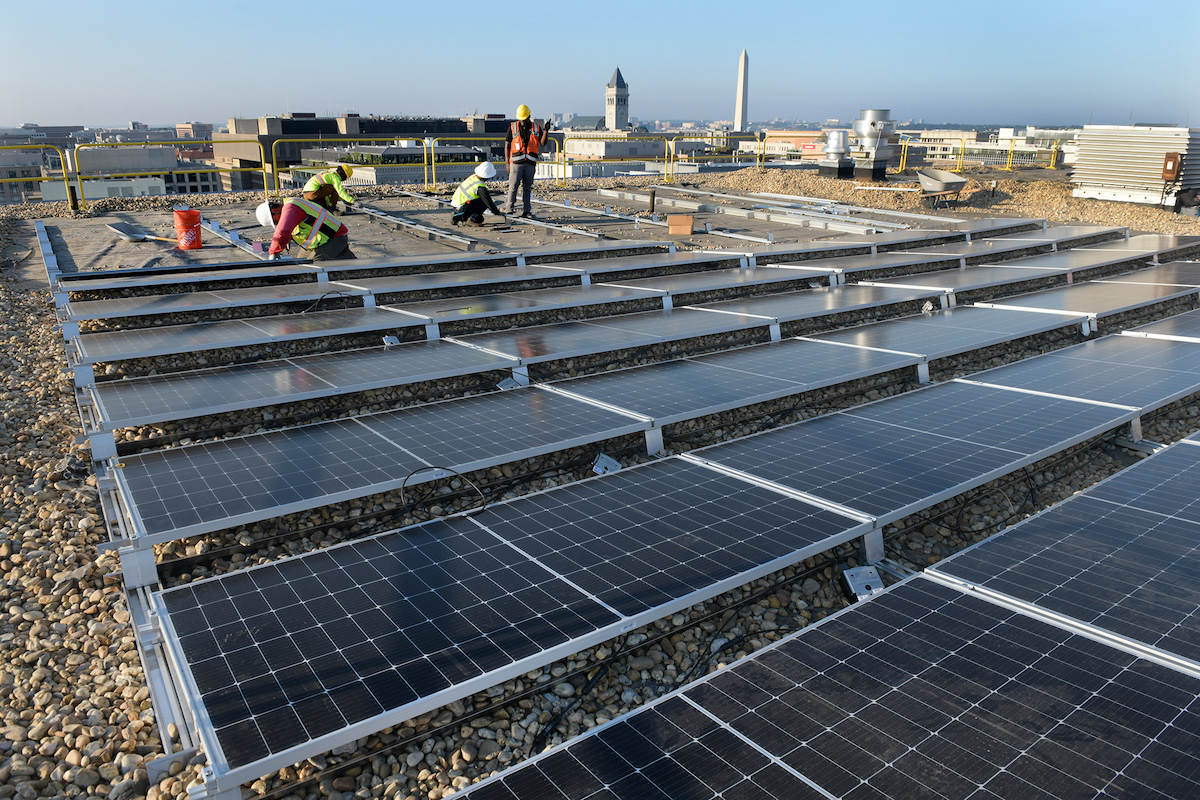
We’re also partnering with the U.S. General Services Administration (GSA), to support our Federal Government in achieving the sustainability goals for Federal buildings and facilities across the District, with an emphasis on fleet electrification, building energy efficiency and electrification, enabling more climate-resilient infrastructure and operations, and most importantly bolstering opportunities in our under-resourced communities with jobs, and ensuring we are targeting local and diverse suppliers and businesses.
We play an integral role in powering the pathway to a healthier, more sustainable future and are committed to providing and supporting climate solutions in partnership with our customers, community organizations, elected official, and other stakeholders.