

CORRECTION: An earlier version of this story misspelled Dr. Andrew Stemer’s name.
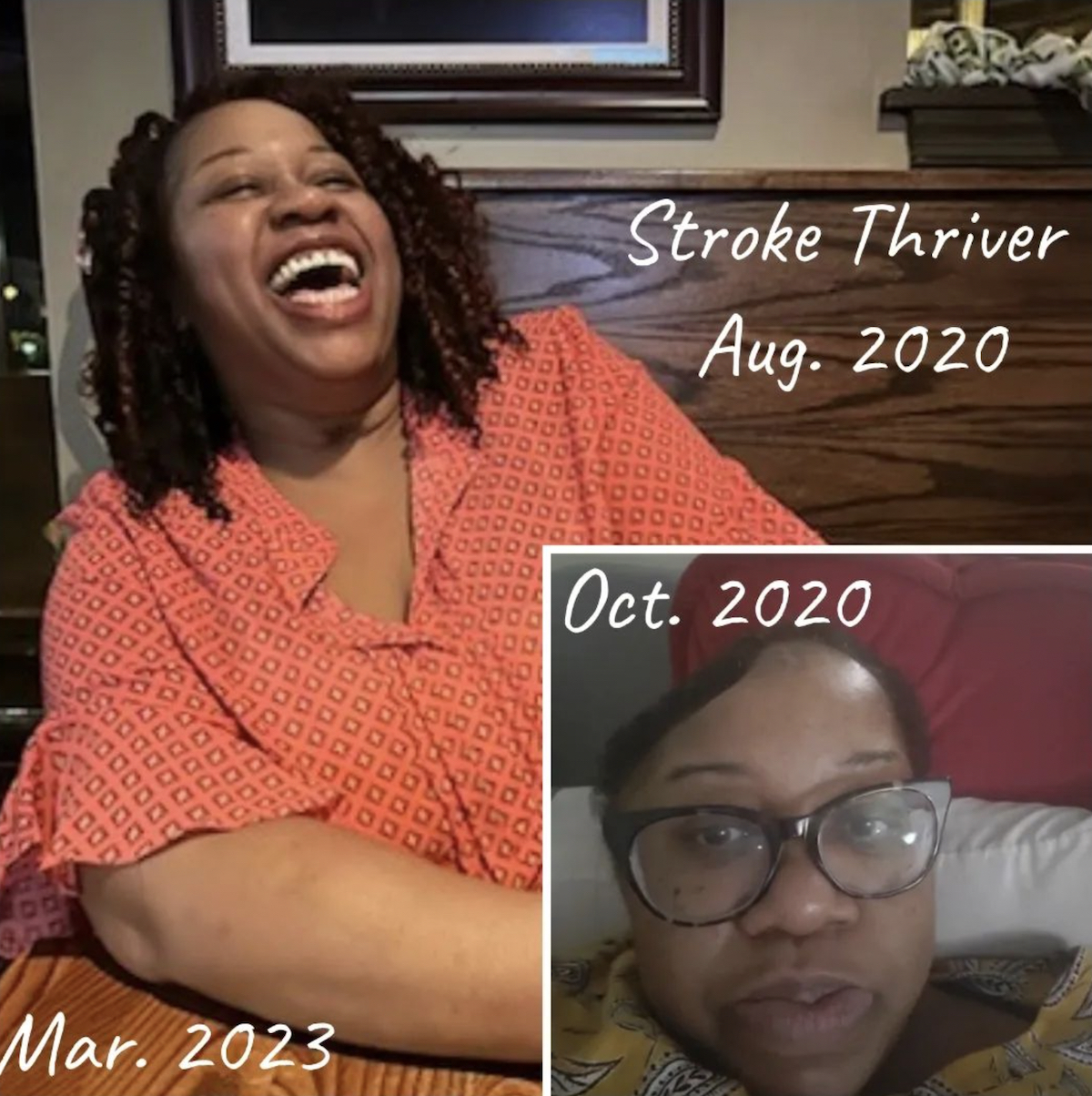
Giving birth at the height of the COVID-19 pandemic, medical professionals treated Erin Adelekun’s lingering headaches with painkillers, deeming discomfort a side effect, and eventually discharging her just two days after her delivery. It was just nine days later when she woke up to what she described as the, “worst headache imaginable,” and quickly learned she was having a massive stroke.
Assuming the cluster of headaches were caused by a lack of sleep from feeding her daughter throughout the night, she decided not to call her doctor about the consistent head pain. However, the morning her migraine greatly intensified, her broken sense of communication gave way to a serious issue taking place.
“My husband told me he would cook me breakfast and let me get some rest. He called me to notify me that breakfast was ready, and I thought I was saying I’ll be down in a minute, but I couldn’t talk and was [actually slurring my words],” Adelekun told The Informer. I ran downstairs and I couldn’t communicate with him, and then suddenly, my arm gave way and I knew that I was having a stroke. I was [thinking] ‘Oh my goodness, I’m having a stroke! This doesn’t happen to young people!’”
The U.S. Department of Health and Human Services Office of Minority Health reports that African American women are “twice as likely to have a stroke as compared to non-Hispanic White women.” African Americans are roughly 50% more likely to experience stroke than their white adult counterparts, with Black men being 70% more likely to die from a stroke compared to non-Hispanic white males.
Common risk factors related to stroke are hypertension, high cholesterol, cigarette smoking, and obesity or being overweight. Alarmingly, African Americans represent disproportionate numbers of diagnosis and fatalities among several risk factors for stroke.
Dr. Andrew Stemer, a neurology specialist at MedStar Health, explained the more common and also discreet symptoms that can signal an oncoming stroke.
“The most common causes of stroke would be things like facial droop or weakness of one side of the body or the other. Stroke affects the brain, and the brain controls everything, a stroke can present with almost anything. So, there’s almost nothing that you would say [that is] impossible for it to be a stroke,” Stemer said. “Having said that, the things that are harder to catch would be balance problems and vision problems. Those are potentially very severe warning signs, but they’re not always easy to catch.”
A person’s lifestyle habits can be their greatest line of defense against illness, or poor choices that can potentially incite the fatal disease. Nutrition plays a critical role in our well-being.
Stemer said there are things people can and cannot control when working to avoid a stroke.
“We can’t control our age. We can’t control our genetics, which also plays a role. But you know, we can control things like diet and exercise and try to control those risk factors as best we can.”
Self-Advocacy When Being Treated
Despite her clean bill of health, with tests yielding great results throughout her pregnancy, Adelekun was still experiencing crippling pain that resulted in a stroke.
Upon arriving at Medstar Health for treatment, Adelekun fell into a seizure and was eventually put into a medically induced coma to prevent further swelling in her brain. The severity of her stroke later onset aphasia, which is the loss of ability to understand or express speech due to brain damage.
Scrambling for answers during her treatment, tests revealed that she was positive with COVID-19 at the time of her stroke, giving her neurosurgeon strong suspicions to being the cause of her near-fatal episode.
“My neurosurgeon said he had been seeing an uptick of young people having strokes because of COVID. So, he said maybe COVID [caused it] because I didn’t fit any of the common conditions of stroke patients,” Adelekun said.
Although she felt compelled to follow the directives of her obstetrician during her delivery, her experience post-delivery has made her reconsider the choice to overlook her gut feeling for the missteps of her doctor.
“I think if I would have just listened to myself and not placed so much weight on the doctor’s words, maybe I would not have had a stroke,” said Adelekun, who delivered her baby via cesarean. “Maybe it was because of COVID, I don’t know, but I do think that Black women need to listen to their inner voice, [especially] when it comes to [how we are treated] in the medical field. Just listen to your body.”
Staying motivated to heal and make a full recovery, Adelekun has taken consistent physical and speech therapy to walk on her own again, while correcting her speech abilities post stroke. It took roughly a year and a half before she could be by herself without needing a caregiver at all times.
While Adelekun’s path to recovery post-stroke has proven strenuous, the continued process of her rehabilitation remains empowering to herself and others.
On her social media page, under the name “Stroke Mama,” Adelekun documents her journey, hoping to inspire other women and mothers who have experienced the same to know that they too can overcome the trauma of stroke.
“I think it is my purpose. ‘Stroke Mama’ is meant to inspire stroke and brain injury survivors [to say] that if I can do it, they can do it, too,” Adelekun said. “[At the moment], I can’t work. I don’t know when I’m going to be able to, but I still wanted to do something [meaningful], so I took to social media. Through that, I inspire so many people and they [also] inspire me.”
