


This story originally appeared on Inside Climate News, a nonprofit, independent news organization that covers climate, energy and the environment. It is republished with permission.

For Jeanette Toomer, the hours she used to spend to ensure that her hair was perfectly done-up years ago was not just a matter of style — it was a cultural statement.
As a Black woman who came of age in the 1970s, Toomer favored natural hairstyles over those that required the use of chemicals — a nod to the self-empowerment and “return-to-our-roots” ethos that rippled across the African-American community in the years after the civil rights movement.
“I started out with plaits and afros when I was in high school,” recalled Toomer, who’s now 66 and lives in New York. “At the time we were trying to be natural, be Black power, all of that. When I was getting ready to graduate, though, I started relaxing my hair.”
Worried that her natural styles would not be taken seriously as she pursued an acting career, Toomer began using chemical straighteners — many of which relied on the toxic substance formaldehyde, a known carcinogen — to straighten and smooth her naturally curly hair.
Now, Toomer fears, the straighteners may have exacted a terrible toll: in 2021 — after what Toomer says were more than four decades of regularly using formaldehyde-based relaxers — she was diagnosed with stage 4 endometrial cancer, which she believes can be traced to her use of hair straighteners.
“We were doing these perm relaxers with no idea that we were giving ourselves cancer all these many years,” she said, referring to herself and the untold numbers of other Black women who have used chemical hair treatments since their creation in 1905. “I’m never using it again. I’m never using it again.”
This fall, the Food and Drug Administration proposed a ban on the use of formaldehyde and other formaldehyde-releasing chemicals as an ingredient in hair straightening or smoothing products, citing the chemical’s links to cancer and a range of other adverse health effects, including nervous system disorders, respiratory problems and skin conditions.
“Studies have shown that when hair straightening products containing formaldehyde, which are often marketed towards Black women are used with heat, the risk of certain cancers, including certain upper respiratory tract cancers and myeloid leukemias increases,” said Namandjé N. Bumpus, the FDA’s chief scientist, who noted that those health effects are “unacceptable.”
Bumpus, who is Black, said she hopes the proposed ban would help set a standard for “promoting safer alternatives, ensuring that everyone is protected from potentially harmful exposure.”
“This is really an individual decision for people about how they want to present,” said Bumpus in an interview with Inside Climate News, adding that these products disproportionately impact Black women. African Americans make up 14 percent of the population, but spend nine times more on ethnic hair and beauty products than non-Black women, according to a recent Nielsen report.
Bumpus continued: “What’s important to me in my role is to make sure that everyone’s able to do that in a way that is as healthy as can be, and that we’re really protecting people’s health and prioritizing people’s health as they’re making those decisions.”
One study last fall underscored the devastating effects of those exposures: the National Institutes of Health found that there was an increased risk of uterine cancer among women who used formaldehyde-based hair-straightening products at least four times a year. The study said the rates of uterine cancer among Black women have been increasing in the U.S. and that because Black women use hair straighteners more frequently, they may be more affected. Another study by the same team found there was an increased breast cancer risk in connection with the use of hair straighteners as well as permanent hair dye.
The NIH studies are far from the first warnings about the potential hazards of formaldehyde. In 1987, the Environmental Protection Agency found that the substance was a “probable human carcinogen,” and the International Agency for Cancer Research, a division of the World Health Organization, released a similar finding a year later.
With those long-standing scientific studies in mind, researchers and policy advocates welcomed the FDA’s proposed ban. They also say the government needs to ban formaldehyde in all beauty and personal care products — not just chemical straighteners. They also expressed hope that the agency — which will soon be empowered with new authority to oversee cosmetics this December after nearly a century of minimal regulation in the U.S. — should start taking a closer look at other potentially dangerous ingredients.
“It felt like, ‘Finally, about time,” said Ami Zota, a scientist at Columbia University, whose research centers on the adverse health effects of chemicals in beauty products. “Here is the FDA trying to take action — in part motivated both by the science but also the increase in public awareness and the media attention to the issue. The effort feels very piecemeal — but we’ll take it.”
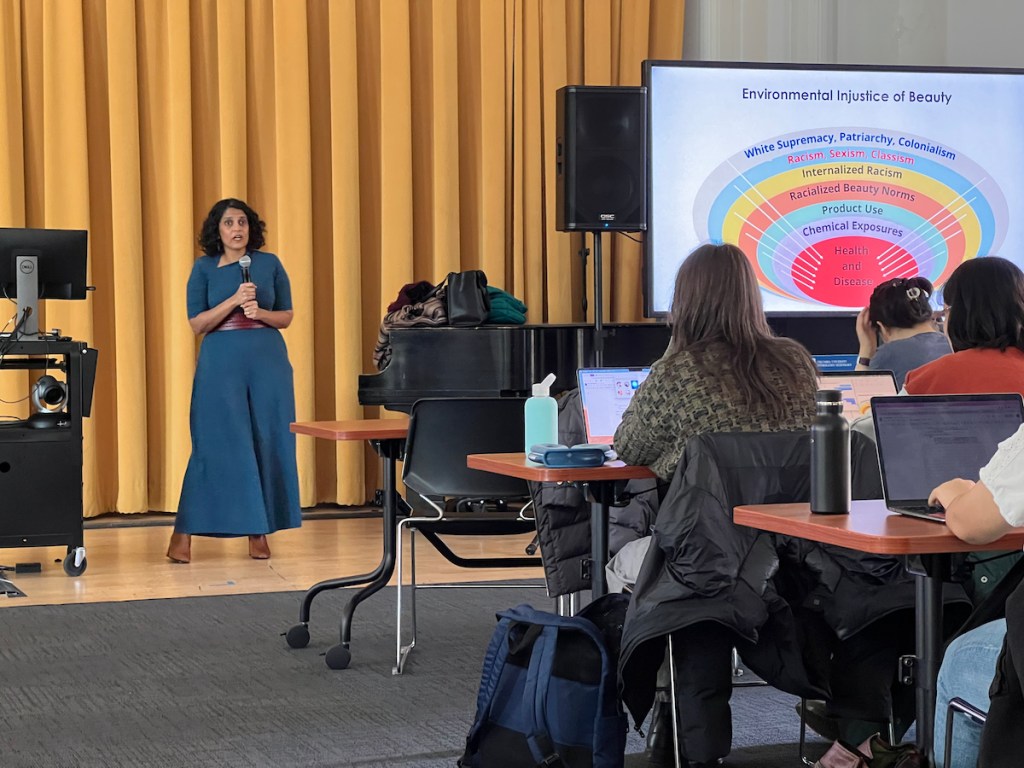
Zota, an associate professor of environmental health sciences, has been documenting how racialized beauty norms compel women of color to disproportionately use cosmetics — and face a greater threat from potentially harmful chemicals than their white counterparts.
The chain of events that led the FDA to begin the process of imposing a formaldehyde ban is the story of outdated, 85-year-old guidelines that have largely hamstrung federal agencies when they tried to place controls on the often toxic substances used in cosmetics, leaving government scientists emailing one another with increasing urgency about the need to protect consumers from a known carcinogen. It is also the story of how lobbyists for the beauty industry have successfully forestalled efforts to strictly regulate chemicals; and of women like Toomer, who find themselves questioning whether they placed their health in jeopardy for beauty’s sake.
Toomer compared the relative dearth of information about the harms of chemicals in hair care products to the notorious scientific study at the Tuskegee Institute in Alabama in which Black men with syphilis were not told about their condition — or treatments for it — over the course of 40 years.
“I mean, come on, the fact that they sold it to us and didn’t tell us everything,” Toomer said, referring to formaldehyde-based hair relaxers. “It’s just a history of abusing Black people.”
This story is the first in a series for Inside Climate News about how lax regulation of beauty care products victimizes women of color, “Dereliction of Beauty.” Victoria St. Martin reported this story while participating in the USC Annenberg Center for Health Journalism’s 2023 National Fellowship.
