

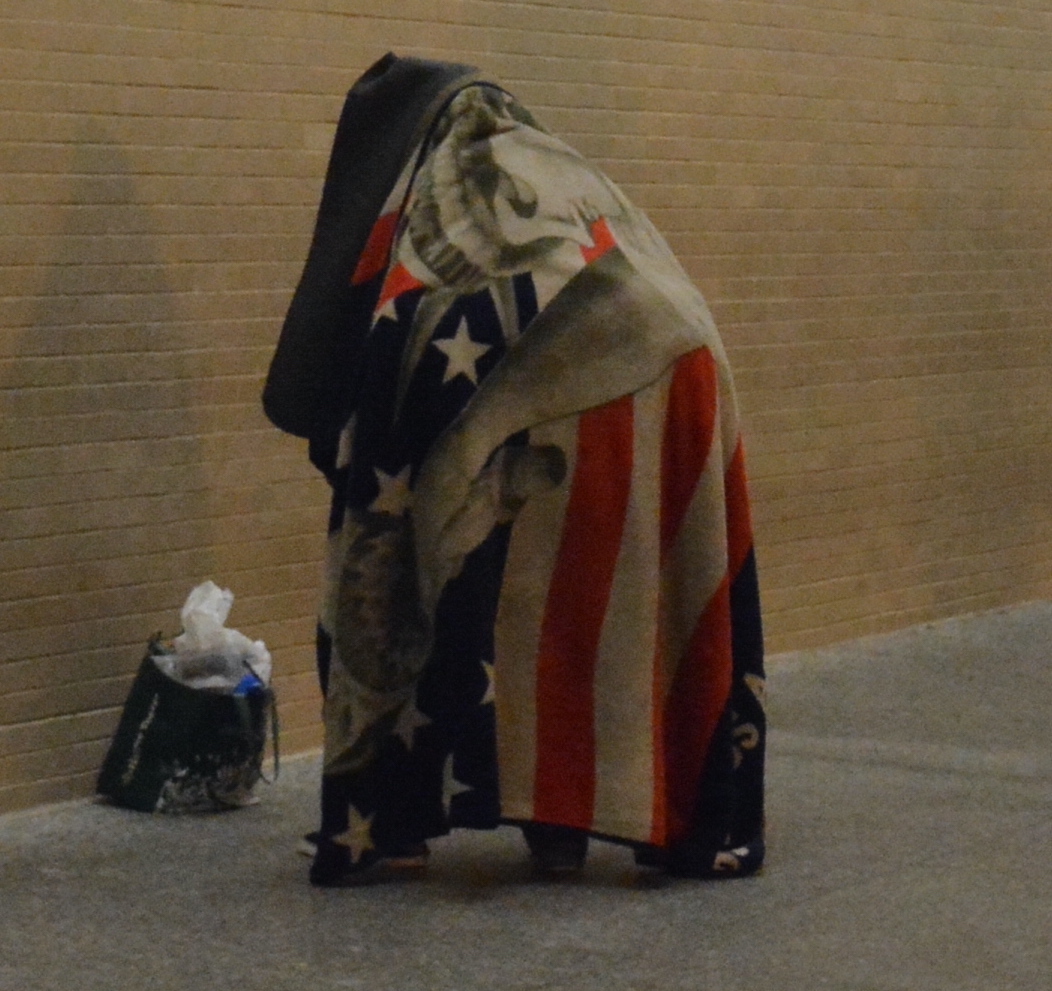
On a Wednesday late last month, volunteers around the country walked their cities’ streets in pairs, working until as late as 2 a.m. in an effort to identify, tally and connect with anyone sleeping on the streets that night. Thousands of volunteers nationwide participate in the annual Point-In-Time Count, a one-night survey that provides crucial data for understanding municipalities’ unhoused populations.
This year’s count, held Jan. 24, began less than two weeks after the Supreme Court decided it would hear a case determining whether local governments are allowed to criminalize things like using a cardboard box for protection while sleeping outside. The case, Grants Pass, OR v. Johnson, Gloria, et al, will decide if Grants Pass — and all U.S. cities — can jail or fine people for being unhoused when shelters and other options for sleeping indoors are full. The law currently says that’s unconstitutional.
The question of whether penalties for lying down or pitching a tent on public property constitute “cruel and unusual punishment” under the Eighth Amendment may be up for debate. But the question of whether those policies actually work to reduce the ever-growing problem of homelessness in the United States is not. Criminal records and debts from municipal fines present additional barriers for anyone seeking employment or permanent housing.
Supporters of cities’ rights to enforce no-camping policies argue that preventing criminalization ties leaders’ hands, taking away necessary tools for addressing homelessness. At the same time, U.S. jurisdictions have utilized the strategies that have proven successful elsewhere in the world — namely, providing stable, low-cost housing options without hoops to jump through or years-long waitlists. Or, of course, building more affordable housing so that fewer people end up unhoused in the first place.
It seems like anyone who believes punishment is one acceptable tool for addressing homelessness has never talked with someone who is on the street because they are fleeing domestic violence: or can’t find stable housing because medical debt tanked their credit score; or who grew up in foster care and aged out with no safety net. In fact, it feels like some of these officials may never have truly spoken with their unhoused constituents at all.
Participating in the Point-In-Time Count would be a phenomenal place for these elected officials and appointed justices to start. They should sign up.
In January 2025, let’s see some mayors and judges out until 2 a.m. with a survey.